The Shift Handover: Where Good Data Goes to Die
The filler was running rough all afternoon, the fix was half-finished, and none of it survived the five minutes between shifts. Every plant loses hours this way — in the gap between two crews who each know half the story.
Here's a downtime pattern that shows up in plant after plant once you know to look for it: a spike in stops during the first hour of each shift. The machines didn't change at 6:00. The knowledge did.
The night crew spent four hours learning that the filler runs rough on the light bottles unless you keep the infeed pressure down. At 6:05 the day crew, not knowing, turns the pressure back up to standard, and spends its own four hours learning the same lesson. Multiply by every line and every shift boundary, and the handover gap is one of the most expensive ten-minute windows in the plant — precisely because it doesn't look like downtime. It looks like Tuesday.
Why handovers fail
Not because people don't care. The incoming crew wants the information; the outgoing crew has it. The transfer fails for mundane, structural reasons.
The timing is hostile. The outgoing crew is tired and mentally gone; the incoming crew is still getting dressed. The overlap is five minutes, in a loud place, with a line that may be running. Anything that must transfer in that window had better be short and structured, and usually it's neither.
Memory is the medium. The handover is an oral tradition — whatever the outgoing operator happens to recall in the moment, filtered by fatigue. The rough-running filler gets mentioned; the fact that maintenance was paged and hasn't come yet doesn't. Verbal handovers don't fail randomly, either: they systematically drop *in-progress* items — the half-finished, the pending, the "keep an eye on" — because unfinished business is exactly what a tired brain declares done.
"Fine" is doing too much work. The most common complete handover in industry is one word: "she's running fine." Fine conceals everything — the two jams cleared, the reject rate creeping up since lunch, the workaround currently holding things together. It isn't a lie. It's a summary at the wrong altitude.
What actually needs to transfer
Strip handovers to their function and the incoming crew needs answers to exactly four questions:
- 1.What's different right now? Anything off-standard: settings tweaked, workarounds active, the product that's behaving strangely.
- 2.What's unfinished? Open maintenance calls, a changeover half-prepped, a quality check pending.
- 3.What should I watch? The thing that isn't broken yet but was drifting — the bearing that sounds off, the rejects trending up.
- 4.What happened that I'll be asked about? The big stop, the scrapped batch — context the incoming supervisor will want.
Four questions, a minute each. Everything else in a rambling handover is noise around this signal.
Where the data changes the game
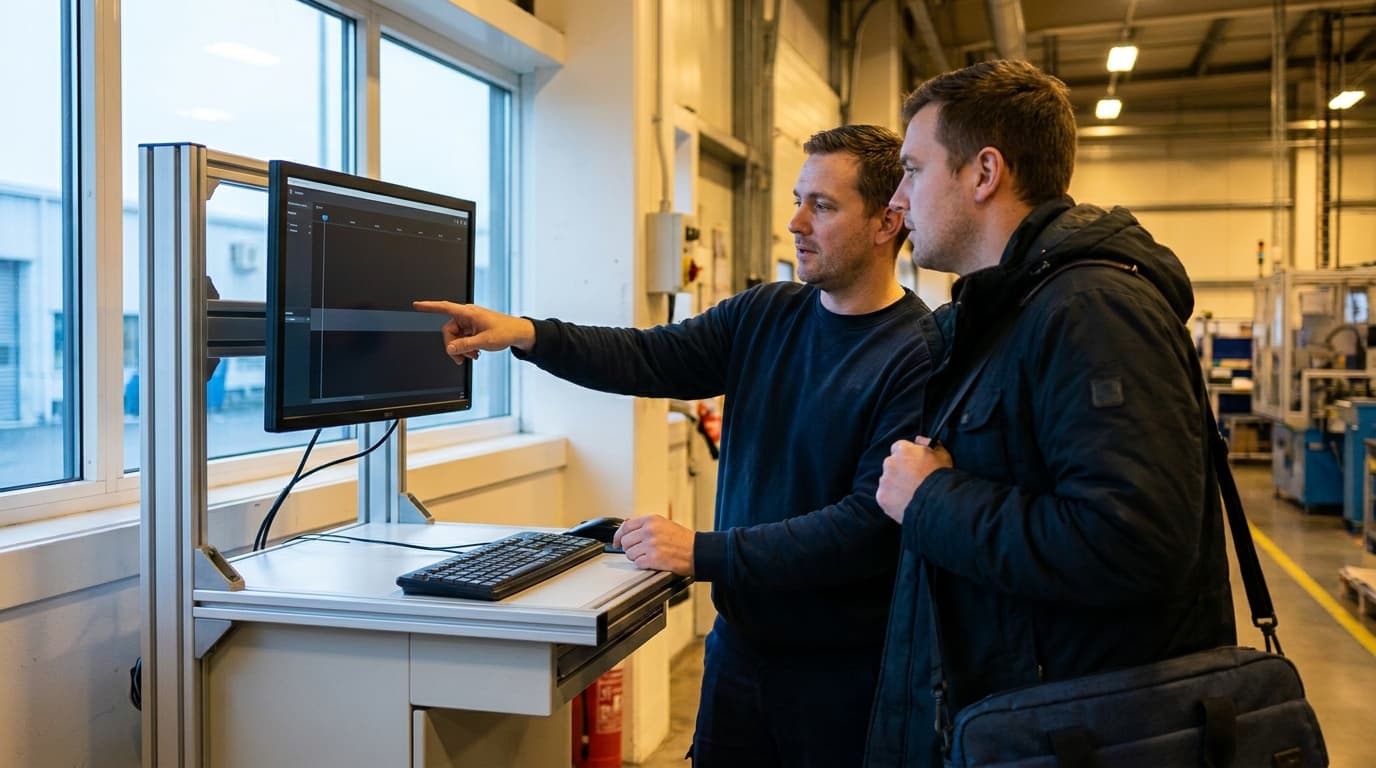
This is one of the quietest benefits of real downtime tracking, and plants rarely buy it for this reason: the handover stops depending on memory. The incoming operator doesn't need the night shift to remember the stops — they're logged, with reasons and times. The shift's history is a screen, not a story.
That changes the conversation's job. The five minutes stop being spent on *what happened* — the data has that — and get spent on the one thing the data can't hold: *interpretation*. Not "the filler stopped three times," which the incoming crew can read, but "it's the light bottles — keep the infeed pressure at the low mark and she's fine." The log carries the events; the human carries the trick. That division of labor is the whole fix.
A simple structure keeps it honest: a standing four-line handover — different / unfinished / watch / happened — filled against the shift's actual downtime log rather than from recall, and read by *both* crews at the boundary. Ten minutes of overlap where both shifts look at the same screen is worth an hour of first-shift rediscovery. Some plants make the outgoing and incoming leads walk the line together; even three minutes of that converts more knowledge than any form.
The test
You can measure your handover quality without observing a single one: look at your stops-by-hour profile across shift boundaries. A healthy handover shows a flat line — hour one of the new shift looks like hour eight of the old one. A spike after every boundary is the plant re-learning, at rated-speed prices, what it already knew ten minutes earlier.
The knowledge was free. It's the re-discovery that's expensive.