Why Operators Stop Logging Downtime (and How to Fix It)
Every downtime tracking effort starts with clean sheets and good intentions. Six weeks later the logs say 'misc — 45 min.' The decay is predictable, which means it's preventable.
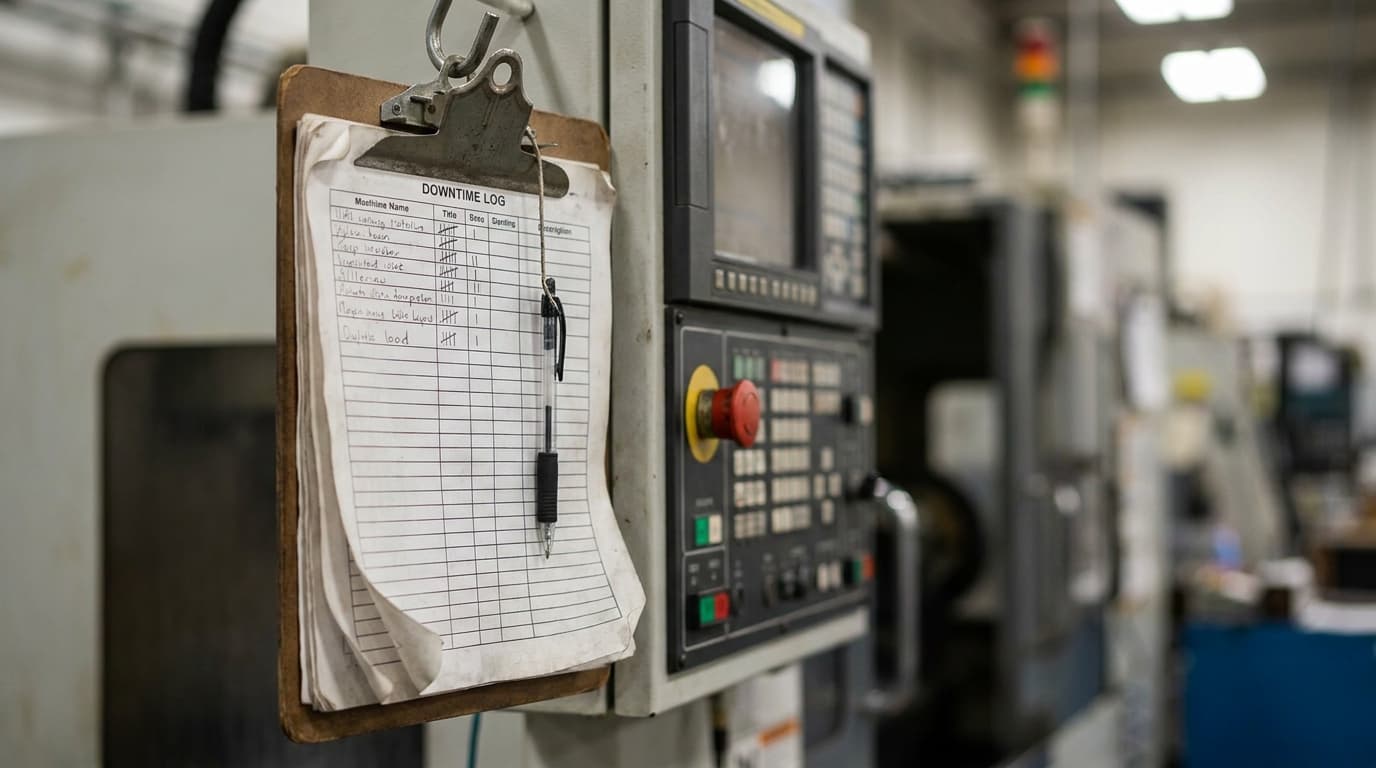
Downtime logging always begins the same way: a fresh form, a kickoff meeting, two weeks of genuinely good records. And then the decay starts. Reasons get vaguer. Durations get rounder — everything becomes 15 or 30 minutes. "Misc" grows. By week eight, the logs describe a fictional plant where machines stop for tidy reasons at tidy intervals, and the improvement team is analyzing fiction.
This decay is so universal that it's worth treating as an engineering problem rather than a discipline problem. Systems fail in predictable modes. So does downtime logging. There are three.
Failure mode one: friction
The most common killer is also the most boring: logging is simply too much work at the worst possible moment.
Think about when a downtime entry gets made — right after a stop, which means right when the operator is busiest. The jam is cleared, the line is coming back up, product is coming, and *now* the system wants a form filled in, or a walk to a terminal at the end of the line, or a hunt through a dropdown of ninety reason codes organized by someone who's never run the machine.
Every step of friction gets paid dozens of times a shift, and operators respond the way any sensible person responds to a recurring tax: they batch it. Stops get written up from memory at shift end — and memory, honestly consulted, produces round numbers and generic reasons. The log isn't dishonest. It's reconstructed, which is nearly the same thing.
The fixes are unglamorous and effective. Cut the reason list to what the operator can see and pick in five seconds — a short tree of the stops that machine actually has, not a taxonomy of every stop any machine could have. Put the entry point at the machine, not down the line. Pre-fill the time from when the stop actually happened instead of asking anyone to remember it. Each removed step shows up directly in data quality. This, more than any feature list, is the argument for purpose-built tracking over spreadsheets — a form that takes five seconds gets filled in during the stop; a form that takes ninety seconds gets invented at 5:45.
Failure mode two: fear
The second killer is quieter and more damaging: the data got used against someone.
It rarely takes more than once. A downtime report shows up in a disciplinary conversation, a shift comparison gets read out in a tone that assigns blame, a manager asks "why was *your* line down so much Tuesday" — and the floor learns, permanently, that the log is testimony. From that day forward the records optimize for safety, not accuracy. Stops migrate into categories that sound like nobody's fault. "Waiting on material" flourishes. Durations shrink to whatever avoids attention.
You cannot audit your way out of this one, because frightened people are meticulous. The only fix is the hard one: the data must be visibly, consistently used on problems and never on people. That means managers reacting to a bad downtime day by asking "what stopped the line?" and not "who was running it?" — every time, including the frustrating times. One lapse costs months. We've written more about this dynamic in OEE as a thermometer, not a report card, because it decides the fate of entire measurement programs, not just downtime logs.
Failure mode three: silence
The third killer: the data goes nowhere. Operators log faithfully for weeks and hear nothing back. No chart on the wall, no "we fixed the feeder because your logs flagged it," no evidence any human reads the entries. Logging becomes ritual, and people are efficient about rituals — they do the minimum that avoids comment.
The floor doesn't need dashboards to stay motivated. It needs one loop closed, visibly, per month. Take the top logged reason, fix it, and say out loud where the fix came from: "the logs showed the cap feeder was our number one stop, so it got rebuilt last week." The next month's records will be better than any policy could make them, because the crew now knows the pen is connected to something.
The test worth running
Skip the log audit. Instead, stand at a line for two hours with your own tally, then compare against what was logged. The gap between what happened and what was recorded is your real data quality — and its shape tells you which failure mode you have. Round numbers and end-of-shift batching: friction. Suspiciously blame-proof categories: fear. Sparse, dutiful, minimal entries: silence.
Honest logs aren't a personnel achievement. They're a design achievement — a system where recording the truth is fast, safe, and visibly worth it. Build those three properties and the data takes care of itself.