Do You Need Sensors to Start Tracking OEE? (No.)
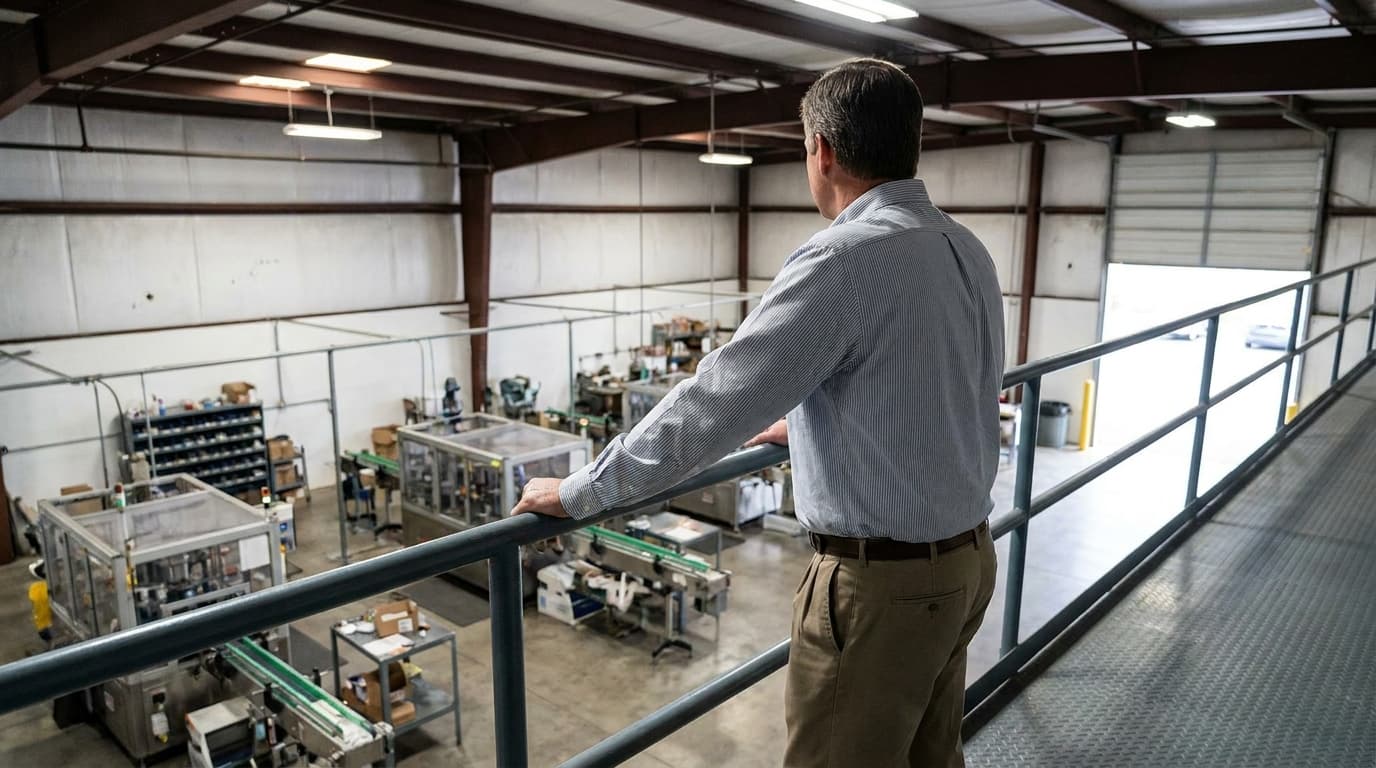
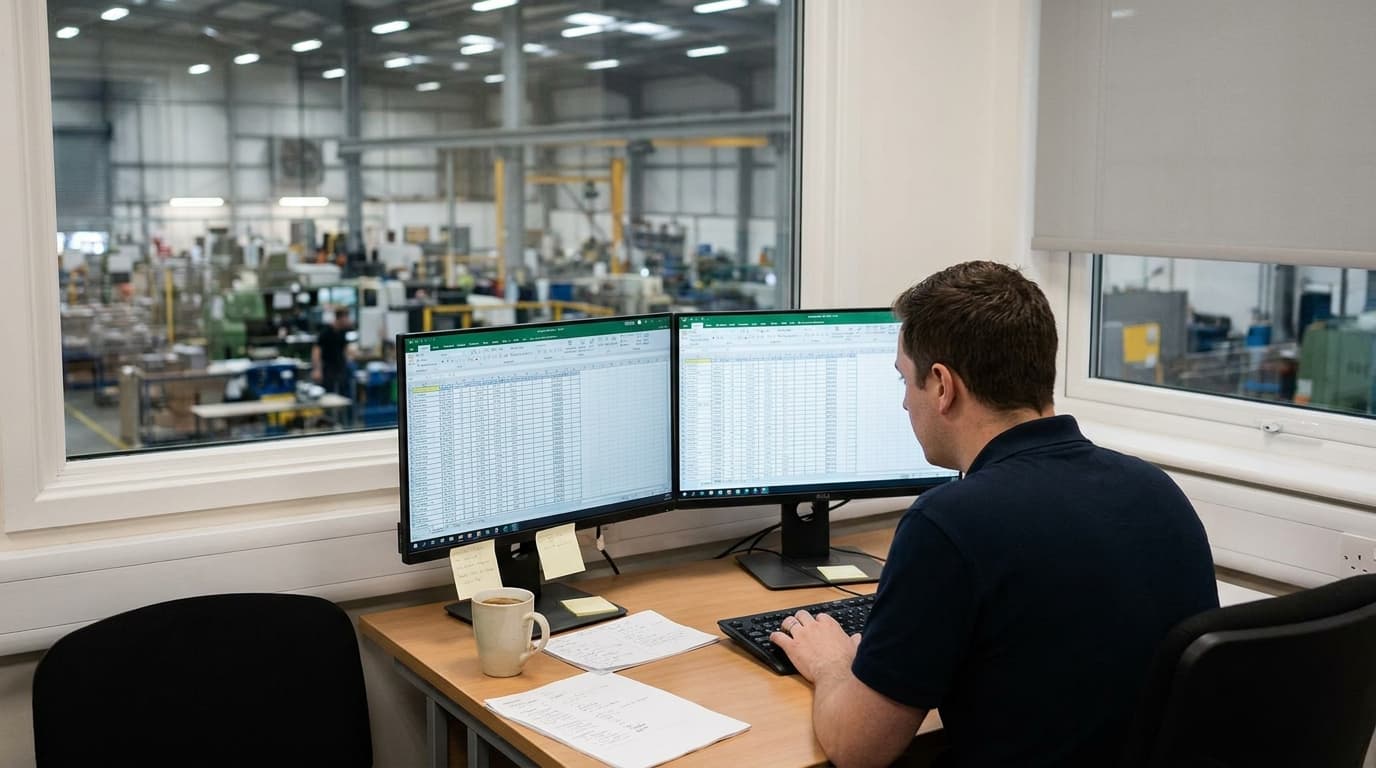
Somewhere right now a plant is postponing OEE tracking until the sensor project is approved, budgeted, and integrated. The sensors will take a year. The clipboard could start Monday.
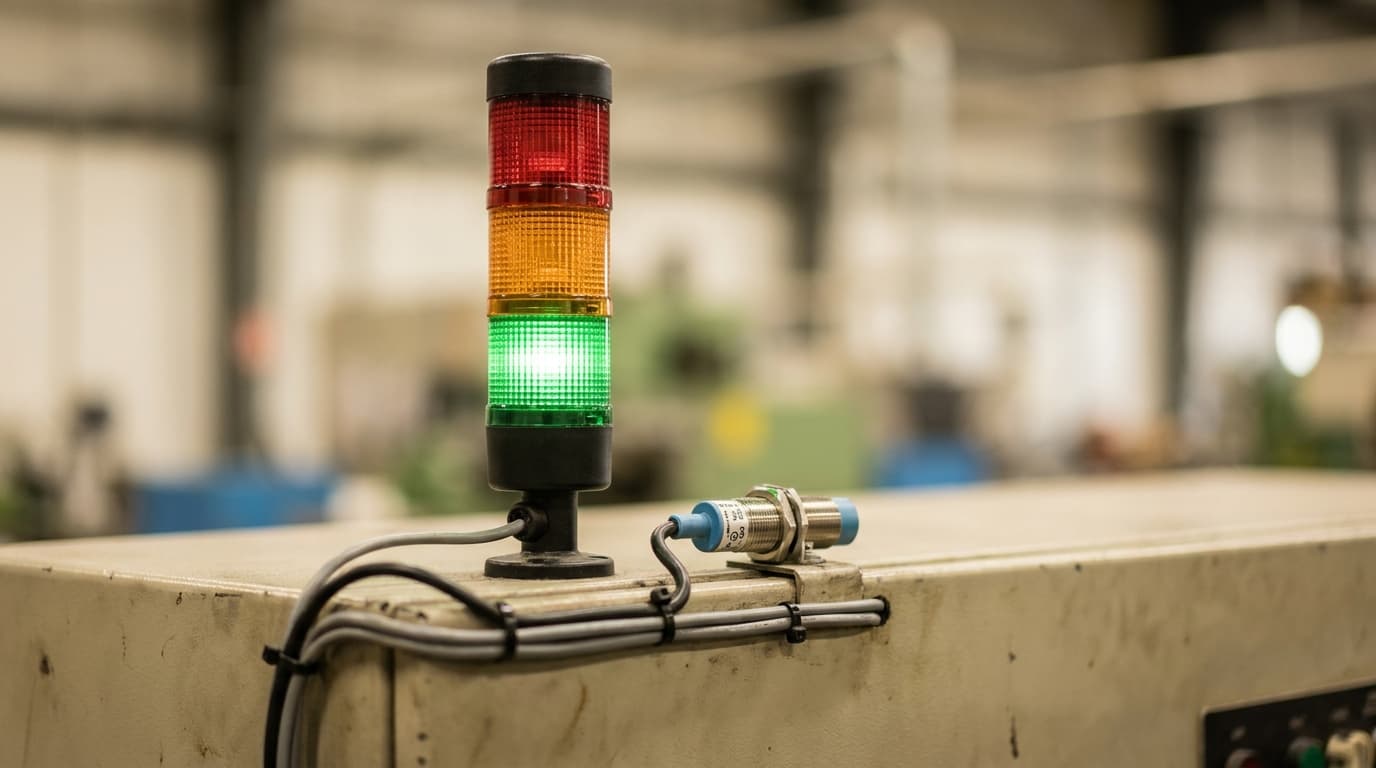
There's a conversation that kills more OEE programs than any failure ever has, and it happens before the program starts. It goes: "We should track OEE." — "Agreed. We'll need sensors on the lines, and they'll have to talk to the ERP, and IT will need to scope it…" And with that, a Monday-morning clipboard decision becomes a next-fiscal-year capital project, and everyone waits.
Let's take the question head on. No — you don't need sensors to start tracking OEE. More pointedly: starting *without* them is usually better, and not just as a compromise.
What manual tracking actually captures
Strip OEE to its inputs and the sensor-dependence evaporates. You need planned time (the schedule — nobody needs a sensor for that), good and total counts (most lines already have counters, or the end-of-line tally exists for other reasons), a rated speed (a decision, not a measurement), and stops with reasons.
That last one is where people assume automation is essential, and it's exactly backwards. A sensor knows *that* the line stopped, to the second. It has no idea *why* — and the why is the entire analytical value. "Filler jam" vs. "waiting on material" vs. "changeover overran" is the difference between three different corrective actions, and only a human can make that call. Every automated OEE system on earth still depends on an operator classifying the stop. The human was never optional; the sensor is.
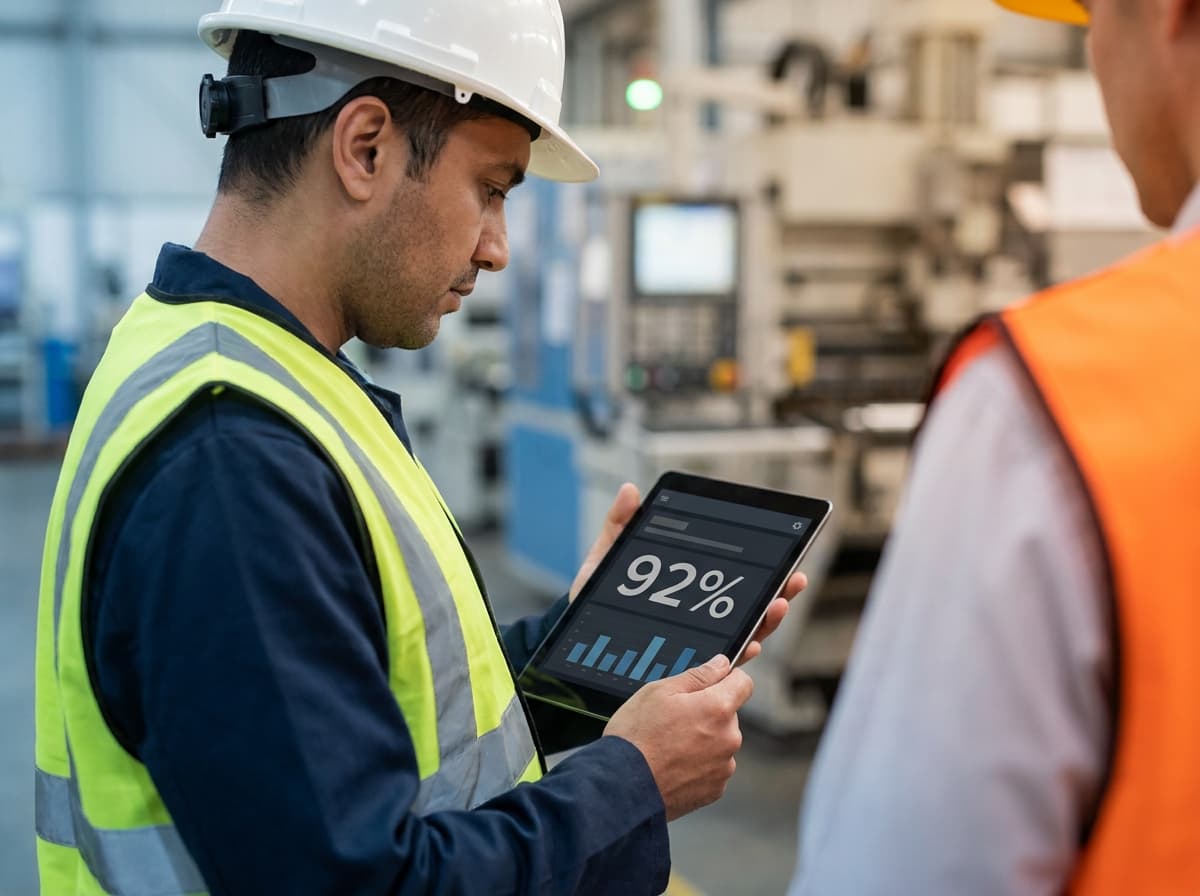
Operator-logged stops on a tablet at the machine — start time, duration, a reason picked from a short tree — capture everything that matters about every stop longer than a couple of minutes. That data will keep a plant's improvement program fed for years.
What you give up, honestly
Manual tracking has one real blind spot: the losses too small and frequent to log. The thirty-second jams, the sensor false-trips — the micro-stops — vanish from manual records, surfacing only as an unexplained Performance gap. Automated cycle counting sees them precisely; a human never will, at any level of diligence, because logging a 30-second stop costs more than the stop.
Precision timing goes the same way: an operator's "about 20 minutes" is really 17 or 24. For prioritizing improvement work, that's fine — you're ranking losses, not billing them. It matters only when the numbers acquire contractual weight.
Here's the thing, though: the blind spot doesn't matter *yet*. A plant starting from nothing has its biggest losses in exactly the places manual tracking sees perfectly — changeovers, breakdowns, material waits, the top five reasons on the Pareto. Those are months or years of work. The micro-stops are the *second* course, and when you're ready for them, even that has a manual bridge: an hour of tally marks at the line finds the worst offenders without a single wire.
The sequencing argument
The deeper reason to start manual isn't cost. It's that automation amplifies whatever measurement culture already exists — including the absence of one.
A plant that has run manual tracking for six months has argued about planned time, settled its changeover conventions, built a reason tree the floor actually uses, and learned to run meetings off Pareto charts. When sensors arrive, they slot into working habits, and everyone knows exactly what they want automated and why.
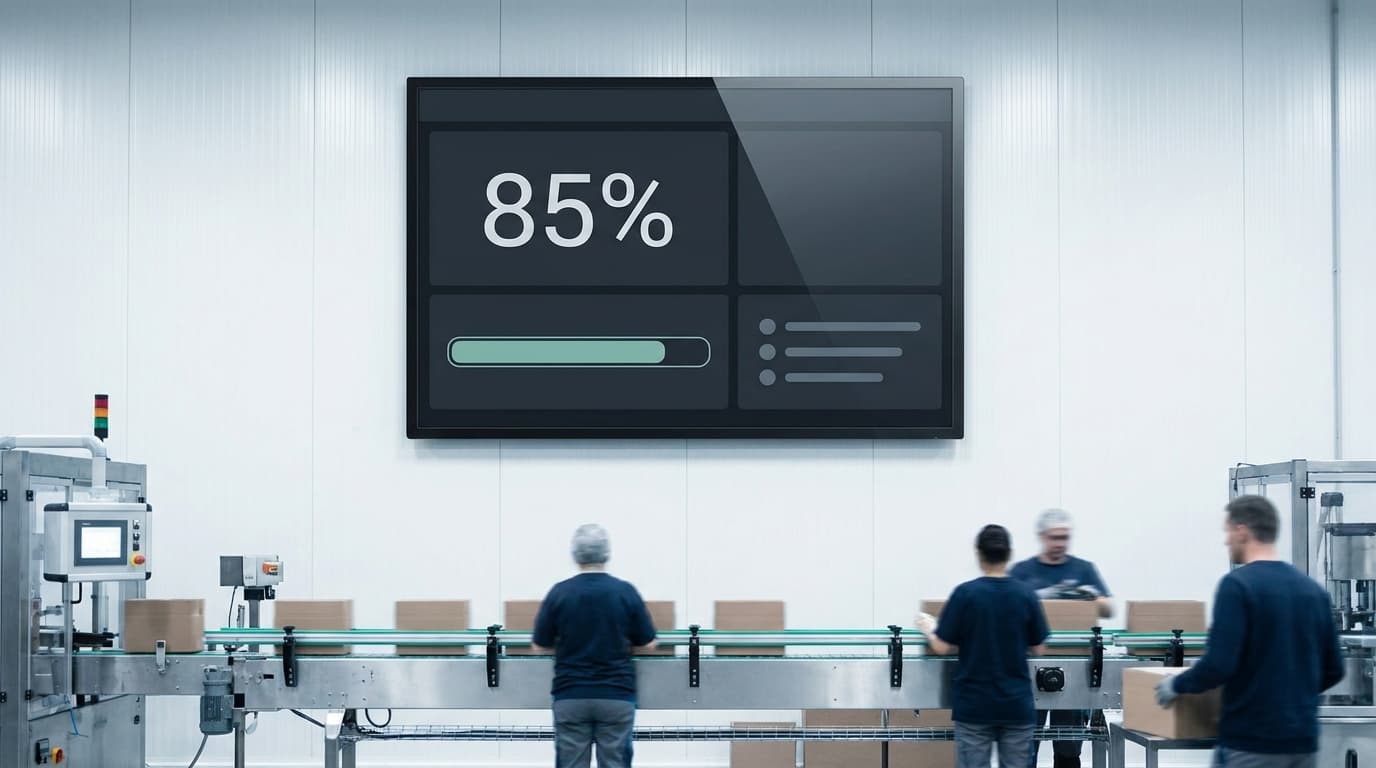
A plant that leads with the sensor project gets precise, continuous, beautifully graphed data that nobody has habits for using — and reason classification (still human, remember) that nobody has built the discipline for. The dashboard is live; the conversations don't exist. We've watched expensive monitoring systems become wall decoration inside a year for exactly this reason. Sensors automate a practice. They can't create one.
So the order that works: manual capture on one line, Monday. Conventions and meeting rhythm by month two. Fixes flowing from the data by month three. *Then* — when someone says "I wish we could see the stops under two minutes" — automate, starting with the line where the data has already earned its keep. By then the sensor project has a precise scope, a proven audience, and a baseline to beat.
The one-sentence answer
Sensors make good OEE tracking better. They cannot make OEE tracking exist. The plants that get value from automation are, almost universally, the ones that were already getting value without it — and the clipboard, unlike the capital request, can start this week.