Running a Morning Meeting That Actually Uses Your OEE Data
The daily production meeting is where OEE data either becomes action or becomes wallpaper. The difference isn't the dashboard — it's whether the meeting is built to narrate yesterday or to change today.
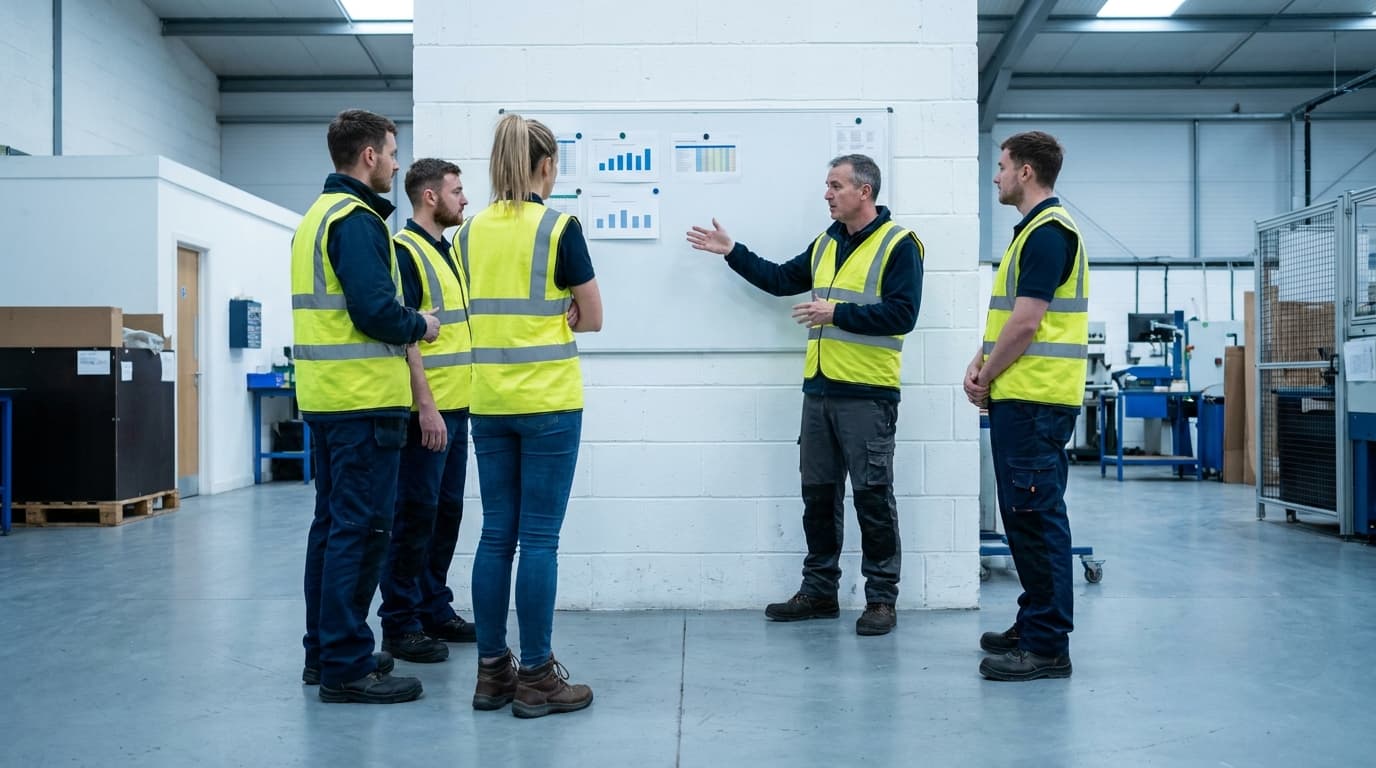
There's a version of the daily production meeting that exists in almost every plant, and it goes like this: someone reads out yesterday's numbers, everyone looks appropriately serious about the bad ones, a few explanations are offered, and the group disperses to have the identical meeting tomorrow. The data was present. It just wasn't *used* — it was narrated.
The gap between a narration meeting and a working meeting isn't the dashboard or the data quality. It's the design of the conversation. Here's a format we've watched work, and the habits that keep it working.
Three questions, in order
A working daily meeting answers exactly three questions, and the order matters.
1. What took our time yesterday? Not "what was OEE" — the top two or three specific losses. "The 1L changeover ran 50 minutes against a 25-minute standard, and the cap feeder starved four times on the afternoon shift." A percentage invites nodding; a named loss invites a response. If your tracking can't produce yesterday's top losses by reason in one glance, fix that before fixing the meeting.
2. Is anything on fire today? The forward-looking question the narration meeting skips entirely. Today's schedule has two changeovers and the material for the second one hasn't arrived — that's a decision needed *now*, while it's cheap. Five minutes of this is worth more than twenty minutes of yesterday's autopsy, because today is the only shift anyone can still influence.
3. What did we do about the recurring stuff? The follow-up ledger. Last week's meeting assigned the feeder rebuild — done or not? This is the question that separates plants where the meeting compounds from plants where it loops. Without it, the same top loss appears every Tuesday, is discussed with equal sincerity every Tuesday, and survives every Tuesday.
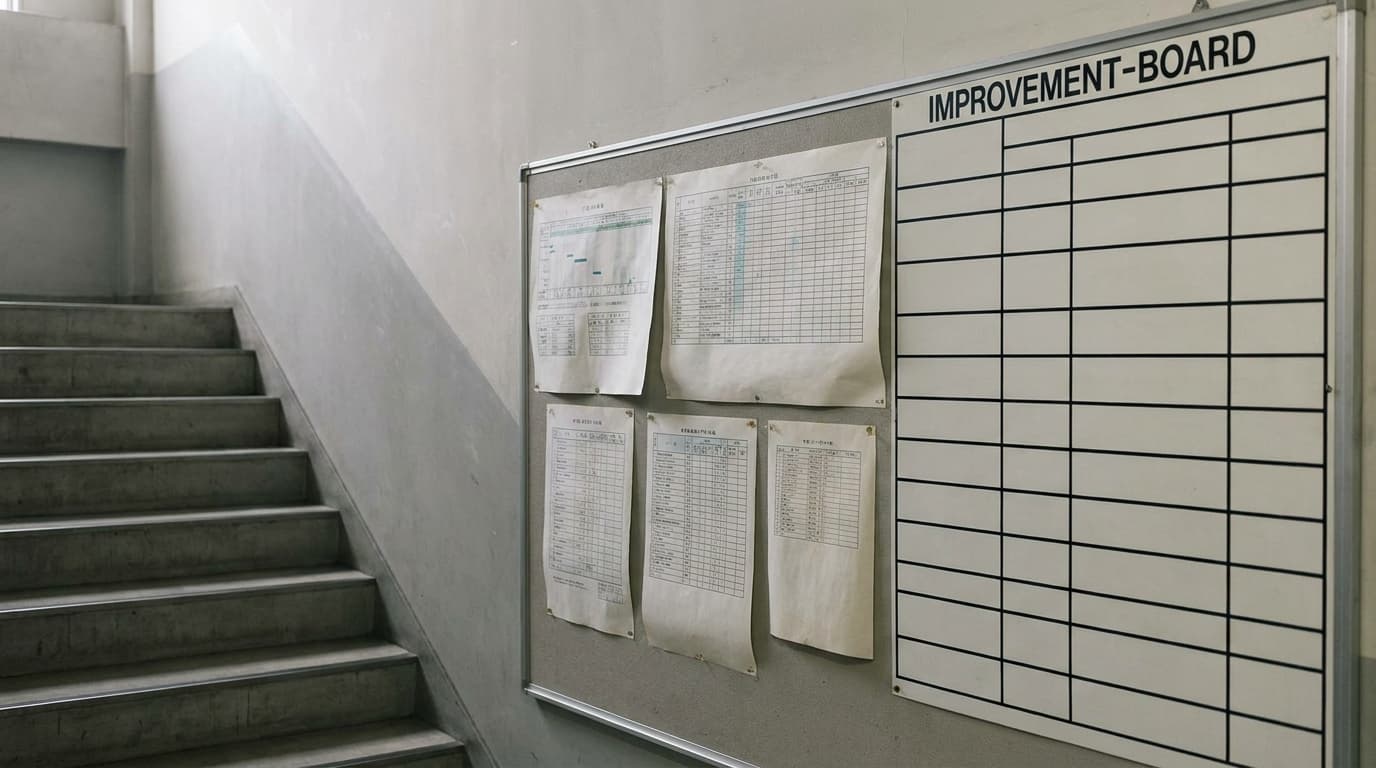
Fifteen minutes, standing, at the board or the screen. When a meeting like this runs long, it's almost always because it's drifted into root-cause analysis — which is real work, but not this meeting's work. The meeting's job is to *notice and assign*, not to solve. "Filler rejects doubled — Amir and the quality tech dig into it this morning, report tomorrow" is a complete meeting outcome.
The habits that decide whether it works
Talk about losses, not scores. The fastest way to kill the meeting is to open with "OEE was 61 against a target of 65." Scores put people in defending mode; losses put people in fixing mode. Same data, different door. The score can live on the wall for trend-watching — the conversation should live one level down, where the reasons are.
Never use the meeting to grade a shift. The moment "why was your line down" replaces "what stopped the line," attendance stays and honesty leaves. The data being discussed was logged by the people in the room; treat it as testimony against them once, and next month's meeting will be working from fiction.
Let the trend answer the "was it a bad day or a bad line?" question. A single terrible day needs triage; the same loss appearing eight days a month needs a project. Keeping a simple week-over-week view of the top reasons stops the meeting from being whipsawed by Tuesday's drama — and surfaces the chronic losses that never have a dramatic day. That's the Pareto discipline applied at meeting cadence.
Close one loop out loud, weekly. Find one thing the data flagged, that got fixed, and say so: "wrapper film breaks are down by half since the tension roller swap." This isn't ceremony. It's the payment that keeps honest logging funded — the floor keeps writing down the truth when the truth visibly causes repairs.
The test
Here's how to tell which meeting you have. Look at the last two weeks and ask: can anyone name a decision that came out of it? A schedule moved, a PM pulled forward, a changeover procedure changed, a project started?
If yes, you have a working meeting, whatever its format. If the honest answer is "we discussed things" — you have a narration meeting, and the data on the screen deserves better. Same fifteen minutes either way. One of them buys something.